Estimated Hours
Estimating effort correctly is a key part of effective project planning. The Estimated Hours feature in Instagantt allows you to define the planned effort a task is expected to take, helping teams anticipate workloads, forecast costs, and make better decisions before work even begins. This article explains how Estimated Hours work, where they appear, how they interact with other planning tools, and how to use them to improve your overall Gantt chart planning.
🧭 Table of Contents
- What Are Estimated Hours?
- Where Estimated Hours Are Available
- How Estimated Hours Interact with Workload
- How Estimated Hours Drive Estimated Cost
- Practical Use Cases for Estimated Hours
- Key Rules and Limitations
- Summary
- Frequently Asked Questions (FAQ)
🔍 What Are Estimated Hours?
Estimated Hours represent the planned effort, measured in hours, that a task is expected to require to be completed. This value is defined before or during planning, and it reflects how much work you believe a task will take—not how much time has actually been spent.
It’s important to distinguish Estimated Hours from Actual Hours:
- Estimated Hours = planned effort
- Actual Hours = real time logged after or during execution
Both fields coexist in Instagantt, allowing teams to compare expectations versus reality without one overwriting the other.
📍 Where Estimated Hours Are Available
The Estimated Hours field is available in two main places:
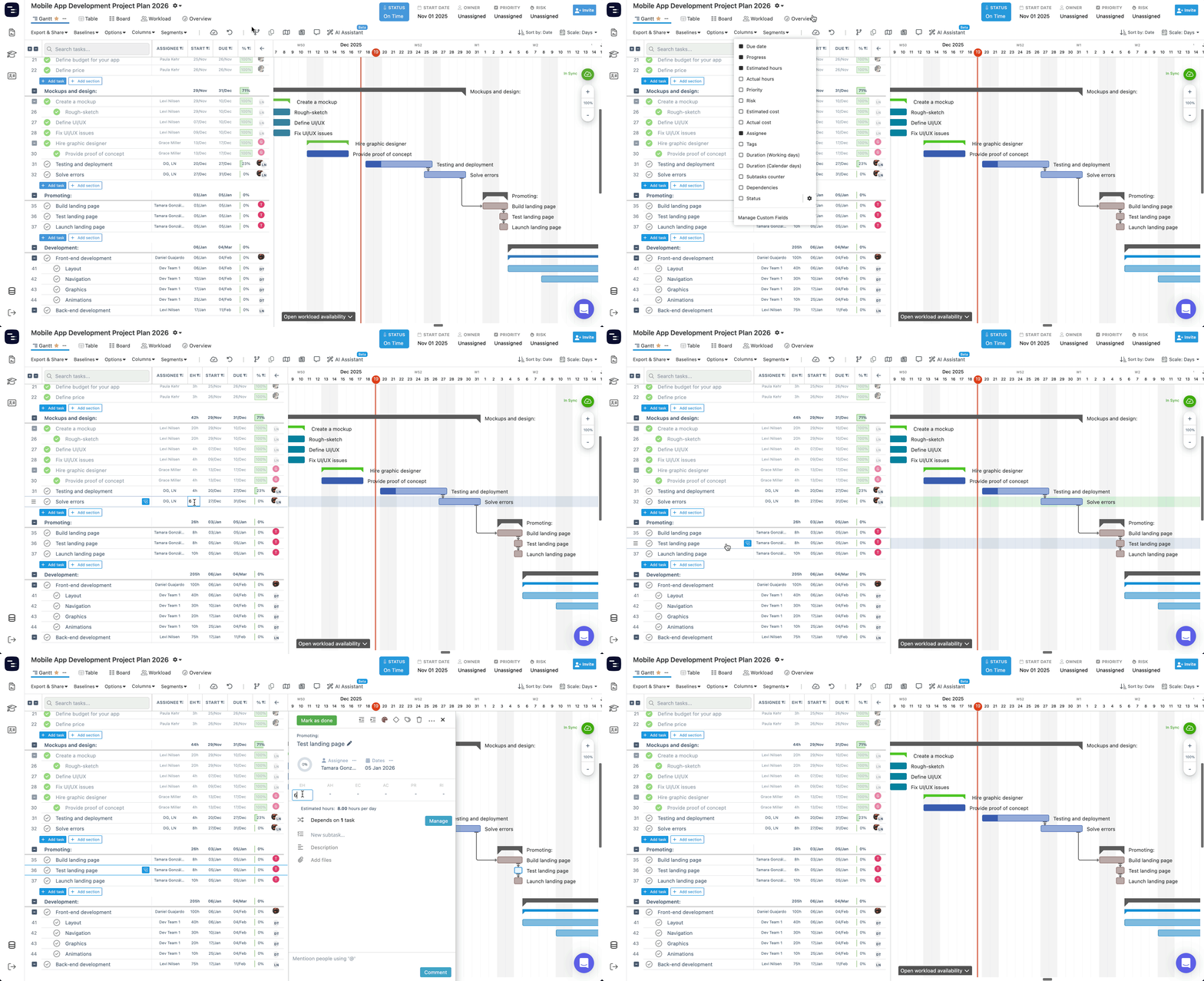
- As a column in the task list in Gantt View, alongside fields like assignee, start date, due date, and tags. If the column is not visible, enable it in the Columns menu.
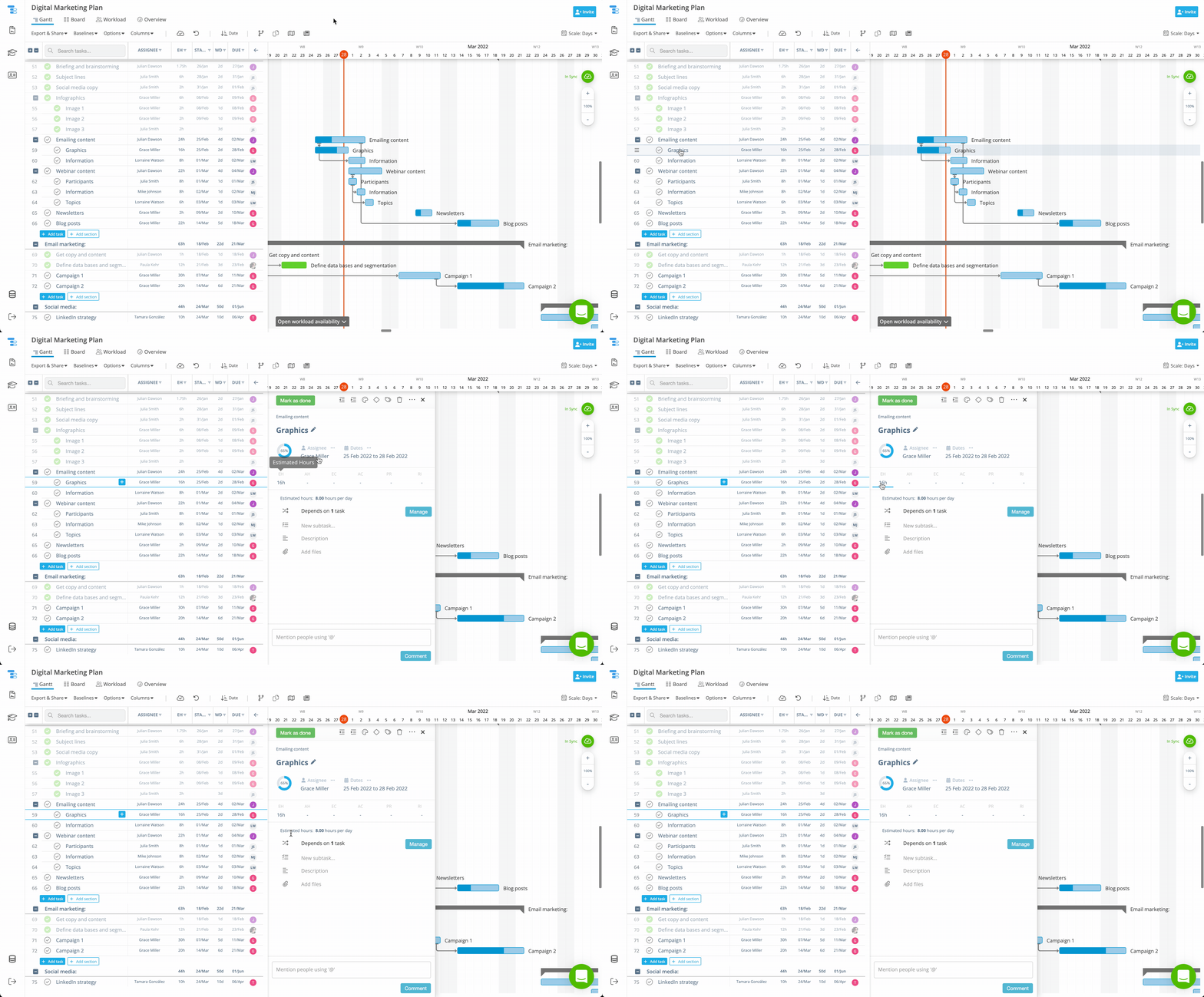
- Inside the task details panel, accessible when clicking any task.
The field accepts numeric values with decimals, allowing precise estimates such as 1.5 or 12.75 hours.
⚠️ Note for Instagantt for Asana users:
Estimated Hours behave the same way in Instagantt for Asana, but syncing depends on your Asana plan. If your Asana workspace has the Estimated Hours custom field (available only on paid Asana plans), Instagantt will sync values directly between both tools.
If you’re using free Asana, custom fields aren’t available. In that case, Estimated Hours added in Instagantt are saved in Asana between brackets at the end of the task name, ensuring the value is preserved and synced even without a custom field.
📊 How Estimated Hours Interact with Workload
One of the most powerful aspects of Estimated Hours is how they drive workload planning.
When a task has:
- An assignee
- A defined duration
- A value in Estimated Hours
Instagantt automatically distributes those estimated hours across the task’s duration, allocating daily workload to the assigned user.
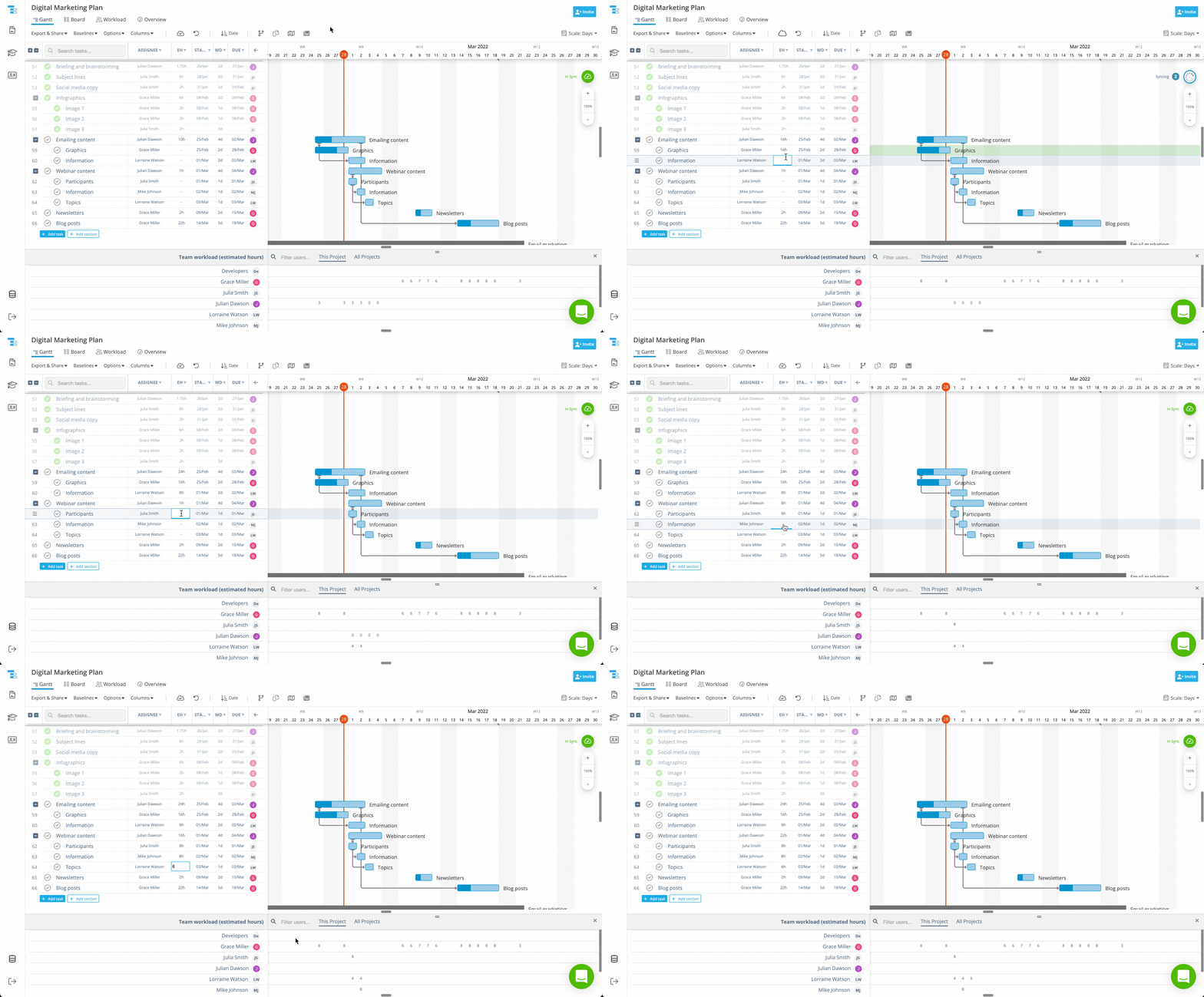
When multiple tasks are assigned to the same person, Instagantt sums all allocated hours, giving you a clear picture of:
- Individual workload
- Over-allocation risks
- Capacity planning across time
This makes Estimated Hours essential for realistic scheduling and team balance.
💰 How Estimated Hours Drive Estimated Cost
Estimated Hours also play a central role in cost forecasting.
When you enable Hourly Rates per Member (from the Options menu), Instagantt calculates Estimated Cost by:
Estimated Hours × Assignee’s Hourly Rate
This allows you to:
- Forecast project costs before execution
- Compare planned cost vs actual cost later
- Adjust scope or assignments early to stay on budget
Estimated cost calculations are fully driven by Estimated Hours, but they remain independent from progress or actual time tracking.
🧠 Practical Use Cases for Estimated Hours
Estimated Hours are useful across many project management scenarios, including:
- Early-stage planning, when timelines exist but execution hasn’t started
- Capacity planning, to ensure team members aren’t overloaded
- Budget forecasting, especially when hourly rates vary by role or person
- Comparing estimates vs actuals, to improve future planning accuracy
- Scenario planning, where adjusting estimates helps evaluate trade-offs
By defining effort clearly, teams gain visibility not just into when work happens, but how much work it represents.
⚠️ Key Rules and Limitations
While powerful, Estimated Hours follow a few important rules:
- The field supports decimal values, but not fractions or formulas
- Estimated Hours are independent from progress, dependencies, and task completion
- They do not update automatically based on duration or progress
- They do drive:Workload calculations
- Estimated cost calculations
Understanding these boundaries helps you use the feature intentionally and avoid incorrect assumptions.
📌 Summary
Estimated Hours in Instagantt allow you to define planned effort clearly, enabling smarter workload planning and more accurate cost forecasting. By separating estimates from actual time, Instagantt gives teams the flexibility to plan, analyze, and improve without losing historical accuracy. When combined with durations, assignees, and hourly rates, Estimated Hours become a cornerstone of effective Gantt-based project management.
🚀 Plan Smarter Projects with Estimated Hours
Use Estimated Hours to forecast effort, balance workloads, and anticipate costs before work begins—so your projects stay realistic, controlled, and aligned from day one.
❓ Frequently Asked Questions (FAQ)
Are Estimated Hours the same as Actual Hours?
No. Estimated Hours represent planned effort, while Actual Hours track the real time spent on a task.
Do Estimated Hours affect task scheduling or dates?
No. Estimated Hours do not change start dates, due dates, or dependencies.
Can I use decimals for Estimated Hours?
Yes. The field supports decimal values for more precise estimates.
Do Estimated Hours affect workload calculations?
Yes. Estimated Hours are distributed across the task duration and summed per assignee to calculate workload.
Do Estimated Hours affect estimated cost?
Yes. When hourly rates are enabled, Instagantt multiplies the assignee’s rate by the estimated hours.
Can Estimated Hours be edited later?
Yes. You can update Estimated Hours at any time without affecting logged actual hours.
How can Estimated Hours be synced with Asana?
In Instagantt for Asana, Estimated Hours sync behavior depends on your Asana plan.
If you are using Asana Premium or higher, you can create a custom field in Asana for Estimated Hours. Once that field exists, Instagantt can sync Estimated Hours directly between Instagantt and Asana, keeping both tools aligned.
If you are using Asana Free, custom fields are not available. In this case, Estimated Hours entered in Instagantt are saved in Asana by appending the value in brackets at the end of the task name. This ensures the planned effort is still preserved and synced, even without native custom field support.
In both cases, Estimated Hours behave the same way inside Instagantt and continue to drive workload calculations and estimated cost normally.