Priority and Risk
Assigning priority and risk to tasks helps teams focus their attention, anticipate problems, and make better scheduling decisions. In Gantt chart planning, these fields add valuable context to your timeline, supporting clearer communication, stronger project management, and more informed decision‑making.
In Instagantt, Priority and Risk are simple, flexible scoring tools that adapt to your team’s internal criteria while strengthening how you plan, track, and review work. Used consistently, they support clearer gantt chart planning, improve decision‑making in complex timelines, and reinforce best practices in modern gantt chart software and gantt software environments.
🧭 Table of Contents
- What Are Priority and Risk?
- Why Priority and Risk Matter in Project Management
- How to Set Priority and Risk
- Using Priority and Risk in Gantt Chart Planning
- Best Practices for Priority and Risk Scoring
- Summary
- Frequently Asked Questions (FAQ)
🧠 What Are Priority and Risk?
Priority and Risk are task‑level attributes that help teams add qualitative meaning to their Gantt chart beyond dates and dependencies.
- Priority reflects how important a task is compared to others.
- Risk represents the level of uncertainty or potential impact if a task encounters issues.
Both fields use a 1–5 numeric scale, but Instagantt does not impose any predefined meaning on those values. Teams are free to define what each number represents, as long as everyone follows the same internal criteria.
This flexibility allows Priority and Risk to adapt to different industries, workflows, and maturity levels — while still supporting structured gantt software planning.
🎯 Why Priority and Risk Matter in Project Management
In effective project management, not all tasks are equal. Some require immediate attention, while others may carry higher uncertainty or impact.
By using Priority and Risk consistently, teams can:
- Focus attention on the most important or sensitive tasks
- Improve communication during planning and status reviews
- Anticipate problems before they affect delivery
- Support smarter trade‑offs when timelines or scope change
- Add decision‑making context to complex gantt chart software timelines
When combined with dependencies and the critical path, Priority and Risk strengthen gantt chart planning by adding strategic insight — not just scheduling logic.
✍️ How to Set Priority and Risk
Priority and Risk are core task attributes designed to support clearer gantt chart planning and more informed project management decisions. In gantt chart software like Instagantt, these fields help teams translate internal priorities and uncertainty into visible planning signals within the Gantt chart.
Priority and Risk are available as standard task fields and can be accessed and edited from multiple areas of the gantt chart interface:
🗒️ Gantt or Table View (Task list) as editable columns in your gantt chart online workspace
📝 Task Details Pane across Gantt, Table, Board, and Workload views
Because they are task attributes, they apply equally to tasks and subtasks, and their behavior is identical in Instagantt Standalone and Instagantt for Asana, ensuring consistency across your gantt software environment.
To set or update Priority and Risk during gantt chart planning:
From the Gantt or Table View (Task list):
- Enable the Priority or Risk column if it’s not visible
- Click the cell and select or enter the desired value based on your team’s criteria
From the Task Details Pane:
- Open any task in the Gantt chart
- Locate the Priority and Risk fields
- Set the values according to your team’s agreed‑upon scale
Changes are applied instantly and reflected consistently across all views, helping teams maintain alignment while planning and managing work in modern gantt chart software.
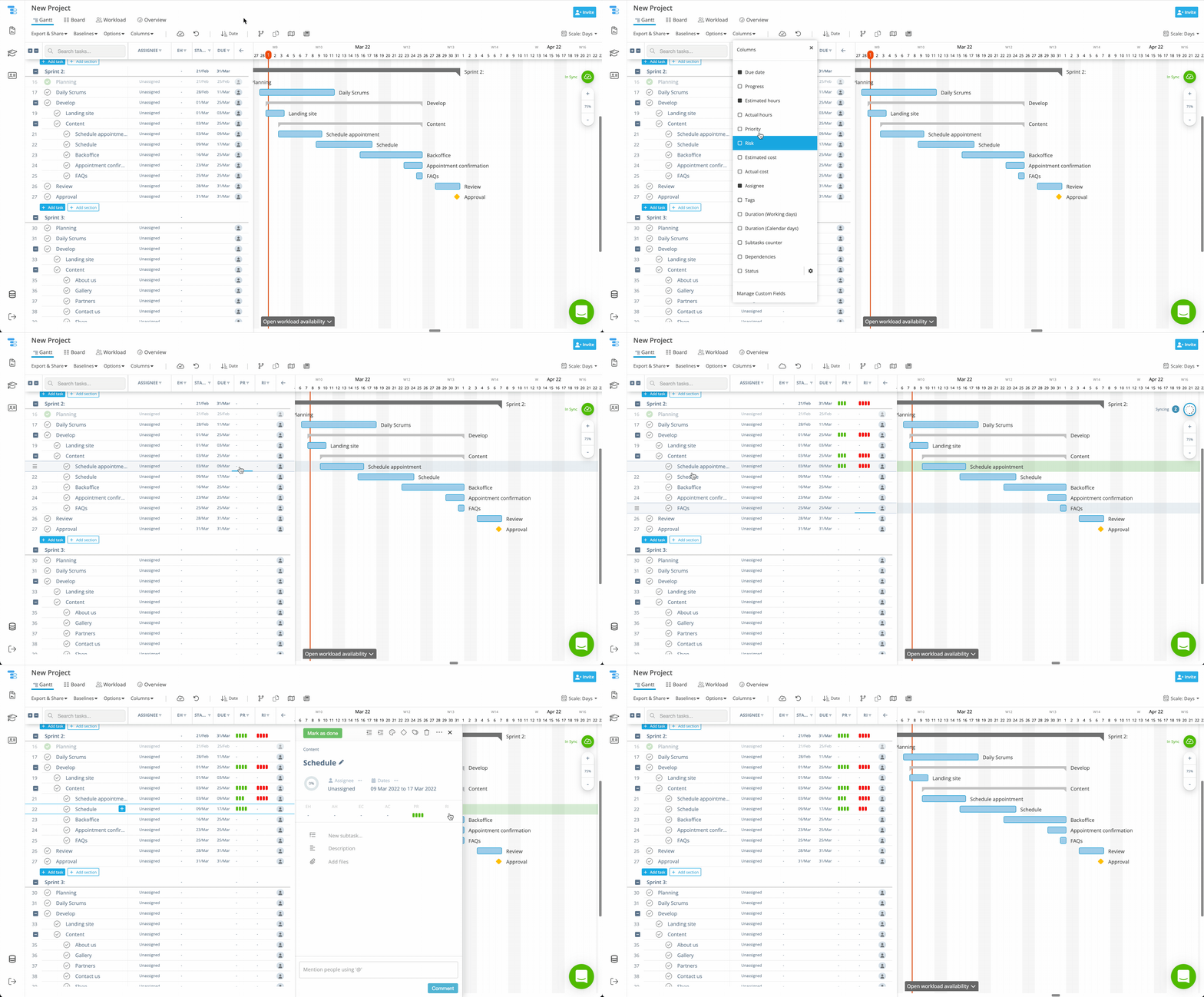
Enable the Priority and Risk columns from the Columns menu and assign values directly on the Gantt chart to add planning context and support smarter gantt chart planning decisions.
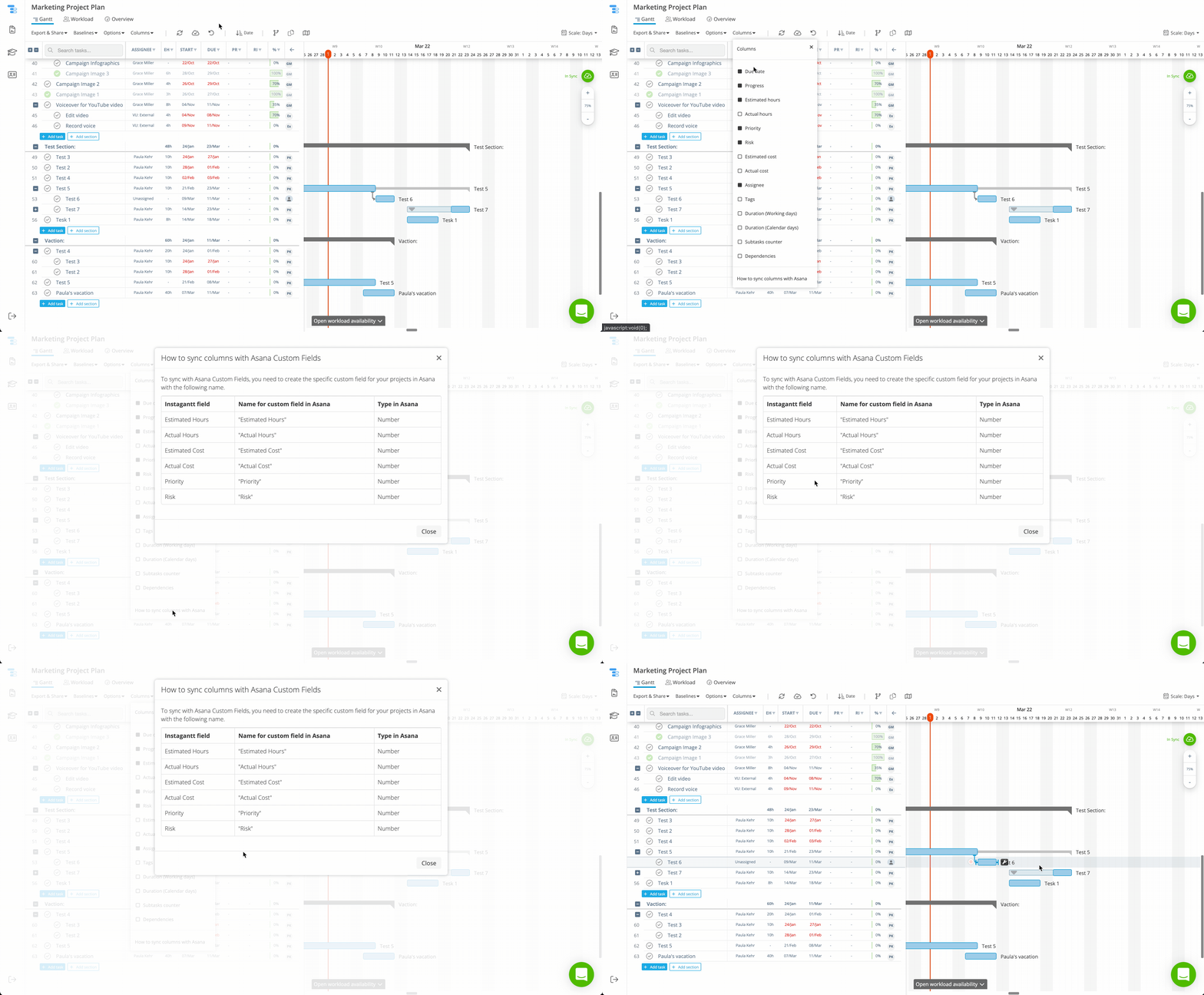
To sync Priority and Risk correctly in Instagantt for Asana, you must manually create Custom Fields in Asana for both attributes. This is required for the values to sync and display properly in Instagantt.
To set this up:
- Open the Columns menu in Instagantt for Asana
- Select “How to sync columns with Asana”
- Follow the steps to create and map the Priority and Risk Custom Fields in Asana
⚠️ Keep in mind that Priority and Risk always use a 1–5 numeric range, so the corresponding Custom Fields in Asana must use those same values. Also note that Custom Fields are only available on paid Asana plans.
📊 Using Priority and Risk in Gantt Chart Planning
Priority and Risk don’t change task dates automatically, but they play a critical role in how teams interpret and act on a Gantt chart.
These fields help project managers:
- Identify high‑priority work that must stay protected from delays
- Spot high‑risk tasks that may require buffers or contingency plans
- Balance execution focus across teams
- Support planning conversations grounded in both urgency and uncertainty
In large or complex projects, Priority and Risk add an extra analytical layer to gantt chart online planning — helping teams move from reactive scheduling to proactive control.
💡 Best Practices for Priority and Risk Scoring
To get the most value from Priority and Risk:
- Define clear internal guidelines for what each score represents
- Apply scoring consistently across the project
- Revisit values as scope, timing, or conditions change
- Use them as decision‑support tools, not rigid rules
When used thoughtfully, these fields enhance gantt chart planning, reinforce accountability, and improve overall project clarity.
📌 Summary
Priority and Risk in Instagantt provide a simple yet powerful way to add strategic context to your Gantt chart. By combining flexible scoring with visual planning, teams can better focus effort, anticipate issues, and make smarter project decisions.
Together, these fields strengthen how you plan, communicate, and execute work using modern gantt software, helping teams get more value from gantt chart planning, gantt chart online collaboration, and structured decision‑making in complex projects.
🚀 Plan Smarter with Priority and Risk
Use Priority and Risk in Instagantt to guide attention, manage uncertainty, and build more resilient project plans.
❓ Frequently Asked Questions (FAQ)
Do Priority and Risk affect task dates automatically?
No. They do not change schedules directly but provide context for planning and decision‑making.
Is there a fixed meaning for the 1–5 scale?
No. Teams define their own interpretation as long as it’s used consistently.
Are Priority and Risk available in Instagantt for Asana?
Yes. To sync Priority and Risk with Asana a custom field for each must be created in Asana. To find out more you can go to the columns menu and click "How to sync columns with Asana."
Can I use Priority and Risk on subtasks?
Yes. Both fields apply to tasks and subtasks equally.
Can Priority and Risk be filtered or reviewed visually?
Yes. They can be reviewed in task lists, task details, and used to support planning discussions across views. Filters can be applied